Showing posts with label School Observations Sri Lanka. Show all posts

Sri Lanka: Kogalla Vocational Training School


The Schools Project Observation

School Name: Kogalla Vocational Training School

Director: Sarath Meddadoda

garmentschool@hotmail.com

Enrollment: 233 students- men: 166; women: 67 Ages: 16-30 years

After having the opportunity to visit some traditional educational facilities in Sri Lanka and doing background research into the state of education in the country, I became extremely interested in the "non traditional" paths to higher education that are available to Sri Lankan students. The government has launched, in the last number of years, a special vocational-training program for students who are not able to attend university. As I have seen, the numbers of students who cannot further their educations at the traditional university level in Sri Lanka is extremely high, leaving many young adults with few options after graduating from high school. Thus, the government has been working to address this critical need for the youth with its technical/vocational training schools. The school is under the auspices of the Vocational Training Authority of Sri Lanka. The guiding principal of the school is to give the students who are not able to attend university another path to success in life. The school building that I visited in Kogalla was relatively new and modern, built about 4 years ago by the central government under its new directive. These schools are spreading everywhere in the country. I was able to travel out to Kogalla, located on the outskirts of Galle District, in Southern Sri Lanka, and talk to the Director, Sarath Meddadoda, as well as get a tour of the facility.
Mission of the School:

The main areas in this particular school include garment manufacturing and electrical training. There are 8 courses offered in this areas. The main courses are machine operating, fabric cutting, inspection, quality control, curtain make,r production supervisor, industrial machine mechanic. The school is about two years old, and was built with the help of USAID, who provided the building and the machines located in the school. The instructors come from both the private and public sectors.

Critical Resources Missing:

According to the Director, the school wants to start a production unit for garments if there was additional resources that could be procured. With a production unit, this would allow for more hands on instruction with the other courses. He desires more practical training for the students. Currently, the students must go to local garment factories for on the job training; He wants to make this all in-house. Making this a reality would mean covering the running costs of the production line; the machinery and labor is all in place, but the materials and sourcing would need to be capitalized.
Most successful training area:

According to the Director, the work study officer program has been the most successful program for the school, because this is, "A very essential area for the growing Sri Lanka garment sector."

Where do you see the school in five years?

" In five years, the school will have a strong production unit. The school will be taking orders and doing exporting of products and be able to send students abroad and provide international training in these areas." The director continued about his future goals, "we would also like to expand the electrical area, into industrial wiring and house wiring for the students."
Programs for the poor students?

According to Mr. Meddadoda, the government is responsible for all of the operating expenses of the school. Some of the courses cost money for the students., and other courses actually pay the students up to 600 rupees per month-these are in high needs areas. However, in all of the areas, if the students are economically disadvantaged, the school will cover their expenses and actually give them a salary. All of the courses will give a 20% reduction in the cost to high needs students-the government provides these funds.

Sri Lanka: St. Thomas College, Matara


Schools Project School Observation

School Name: St. Thomas College

School Location: Matara, Southern Sri Lanka

School Enrollment: 3500 students –all boys grades 1-13: Students are mostly from the city of Matara, but scholarship students come from up to 15km away; there is grade 5 scholarships exams which brings 250 gifted students from the outlying areas to St. Thomas College

Name of Principal/Headmaster: R. Suraweera

Despite the Sri Lankan schools being closed for summer holidays, I was able to interview the Principal of St. Thomas College (in Sri Lanka, colleges are the main high schools/secondary schools), Mr. Suraweera at the St. Thomas campus in downtown Matara. The campus is a large, colonial-era compound of about 10 buildings, all in different states of repair. The college campus houses both primary and secondary schools, as well as athletic areas including a basketball court and cricket field. There were several students at the campus sitting for the National A Level Exams, which are the university entrance examinations. Additionally, I was able to talk to the chief guidance counselor for the school in a separate interview, posted below.

What are the main challenges being faced by the school?

There are 4 assistant principals who support the principal. Organizing a large school is the biggest challenge in the Principal’s day. There are about 25 different academic, sporting, and social subjects being taught, and these must all be organized under a hierarchical arrangement under the Principal’s chief direction. Maintaining the high standards needed is a constant challenge with an organization this large. The other main challenge for the Principal and the teachers is to get the students to go to university. This is an extremely competitive field, as he elaborated on further later on. Another challenge facing the school, which seems to be a very common problem in a nation with such a high birthrate and primarily colonial-era infrastructure is the overcrowding in the classrooms. There are currently about 45 students in each class. The principal thinks this is too many-35 would be more than enough for a teacher to handle. However, there is simply not enough room on the camps to create more facilities to bring down the class sizes at this point. When asked about the challenges of students with special needs, he responded that there is one Special Education teacher and about 5 moderate special needs students in the school (which seems like a very low diagnosed number for the population). The one teacher is trained and able to work with these students one on one and in their regular classes, an approach seen in the Western educational world as well. However, there are no facilities specially dedicated to these students at this time.. There are dedicated special education schools for these children as well about 2 km from St. Thomas, which is where the more severely disabled children are educated.

What has been the biggest success for the school?

The biggest success for the school is with the students sitting for the Advanced Level(university) examinations and successfully completing them. According to the Principal, 100 pupils from St. Thomas enter university every year. In this past year, he was particularly proud of the 16 students who passed the exams and went for engineering, the 3 for medicine,2 for veterinary science, and nine for management. These exams are very competitive in Sri Lanka, and he was noticeably proud of this success rate. Additionally, the Principal expressed his pleasure with the success of the athletic teams at the school. He stated that there is a very good soccer team as well and a lot of focus on various sports that are offered to the boys in the school. Sports can be an excellent way for some of the students to get into the armed forces or police forces. When asked about the students who do not get the opportunity to move onto the university level, he stated that about 50% who don’t go to university get the chance to go to technical training, computer science training, and private sector jobs.

What critical resources are missing? How would they be used?

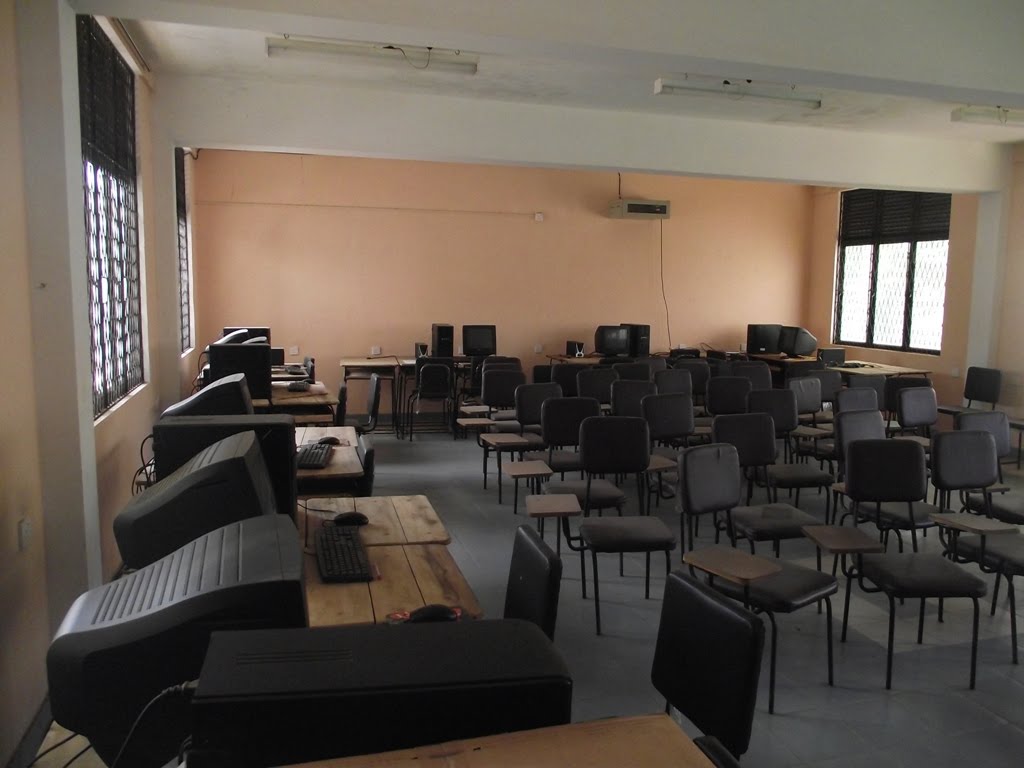
According to the Principal, the school has very small computer science facilities- there are only 10 working computers for 3500 students. The computers were given by the education department about 3 years ago. There are teachers that are trained in IT for the students. The computers are connected to the internet. The school needs about 50 more computers and a server as well. These computers, if secured, would help the students to study for their IT examinations, and help prepare the students for possible careers in the IT sector, one that is booming in this part of the developing world. The school’s main hall is also in need of refurbishing, as well as several of the old buildings which I visited. Many of the classrooms are extremely old and crowded, and are mostly open to the elements. The buildings and offices are very old and have been in continuous use since 1844, when the school was opened by the British as a Christian Academy. The school and its buildings are the second oldest in the entire southern province, and the Principal was strong in his desire to see them retrofitted and/or rebuilt.
What resources are currently being best utilized? Why?

The dancing, music and arts areas are very strong, along with the science facilities. There were 3 students last year who placed first island wide in these areas. The teachers who provide the training in these areas are very passionate about their work, according to the Principal. Thus, the human resources of the campus are its most valuable asset.
What is the main goal of the school? What is your future goal for the school, looking five years down the line?

The main goal of the school, as per Mr. Suraweera, is university for the students. He was very adamant about this point, and this reinforced the strong image of the importance of higher education that I have seen from all the local people I have encountered. It is very unfortunate that in the country, there are inadequate facilities to cater to the demands for higher education; there seems to be a major, fundamental disconnect between the wishes of the people and the ability of the government to deliver in the area of education in this regard. The Principal’s future wishes for the school were extensive. His primary goal was to see 150 students entering university every year. The sports facilities would also be improved, such as cricket. There would be more cadet programs for the students to enter the civil services, such as the armed forces and public sector. Finally, his wish for the future would be for the school itself; he would love to see the environment improved, such as removing the old buildings and building new buildings.
Where does the school’s funding come from?

The education department is the main source of funding for the school. They are responsible for paying the teacher’s salaries and to provide for the general welfare of the buildings. Additionally, local authorities also contribute to the school, such as the MP’s from the Southern Province who contribute funds to the schools. When asked about the procurement of books for the students, the Principal responded that about 75% of the students have new books every year. The students must pay about 660 rupees per year for facilities fees to the school development board. When asked about students who were poor and were not able to pay the facilities fees, he commented on several alumni organizations that provide help; I was able to ascertain more information on this topic from the guidance department chairman.
What are the current partnerships with outside organizations-who/what/where/why?

According to the Principal, there are no current partnerships with outside organizations. The only organization that works with the school is an “old boys organization,” which is an alumni organization. They donate a lot of sports materials and sponsor cricket games for the students, and help to organize other sporting events which often cost a lot of money to organize. However, they are not involved with the academic side of affairs for the school.

Are there at risk programs for poor/disadvantaged students?

The Colombo Old Boys Association provides some scholarships for poor students to attend university, but this is the only outside organization, to the Principal’s knowledge, that provides for help for disadvantaged students and their families.


I was then able to get a few minutes of time with the head of the Guidance Department for the school Mr. Indika Leawal to ask him primarily about the role of guidance, and how they work with at-risk and disadvantaged students in the area.

What is the primary job of the guidance teachers here at St. Thomas, and in Sri Lanka in general?

The main duties In the school are psychosocial counseling, educational counseling, and career goals counseling. Not all the students are selected for counseling. Most of the students who use the counseling have bad family conditions, the main problem in this area being economic problems. The school is free, but these students tend to not be able to pay the tuition fees and fees for equipment. There are some welfare programs that will help these students, but these are not enough. This is a big problem in the country with the students, according to Mr. Leawal. The welfare programs that are currently in place to help the disadvantaged students are funded by the teacher’s contributions and NGO organizations, such as the local chapters of the Red Cross and the Sri Lanka Lions Club.
What is the main goal of career counseling for the students of St. Thomas College?

Most students want to go to university, but statistically in the country, only 2% of the students can go--there are simply not enough universities in the country to come close to handling the need. Only 26,000 students can attend yearly in the universities. For the rest of the students, the path is tough, as most students and families are so focused on university. The counselors thus have to motivate the students to see other options. Some of these options include career training institutes in areas such as hospitality management, a very quickly expanding part of the Sri Lankan economy, and other more generalized vocational training centers. Currently, the best opportunities are in IT training.

Sri Lanka: Southlands Girls College, Galle


Schools Project School Observation

School Name: Southlands Girls School

School Location: Galle, Sri Lanka

School Enrollment: 5000 girls, grades 1-13, Primary and Secondary

Name of Principal/Headmaster: Shanthi Scnevirathne

I was able to very briefly sit with the Principal of the prestigious Southlands Girls College in Galle, Sri Lanka for a short question and answer period. This is the summer holiday in Sri Lanka, and the school was busy administering its university entrance exams to the students on this hot morning in Galle. I had previously been pointed towards Southlands by several former students to whom I had spoken earlier. I was able to get a small taste of the successes and challenges faced by the school.

What are the main challenges being faced by the school?

Mrs. Scnevirathne stated, “We have limited facilities for the students –because of Galle Fort being a historical area, it is very difficult to build new buildings and the premises are too small to meet our student body’s needs.”
What has been the biggest success for the school?

According to the Principal, a lot of her students are moving onto the University level, in such areas as medicine, engineering, arts and in commerce.

What critical resources are missing? How would they be used?
Mrs. Scnevirathne stated, “The teachers here are all trained from the national education institutes, which handle all the teacher training. Thus, our staff development is excellent. However, we have a very small IT section, but no facilities. There are 20 computers, but we need more. The computers are not connected to the internet. There is a big library, but we really want an e-library, but there is not the facilities.” Thus, as I have seen in so many other schools around the world, the biggest resource need is in information technology/computers/internet connectivity, a very common thread throughout the world and in my own experience. Even in classrooms where there are plentiful technological resources, they are often poorly managed and accounted for, as in the NYC school system.

What resources are being best used now? Why?

According to the Principal, the best resource that the school currently has is, “Good knowledge and the core curriculum activities such as science, math, and English.” She continued, “ the students are very motivated to learn, and most of the teachers are motivated.”
Where were the teachers trained? What guidance do they have in the classroom?
The teachers have all trained at the national college level for education. The guidance in the classrooms follows the Ministry of Education guidelines in terms of teaching approaches and practices. I could not achieve more elaboration in this area due to the time constraints present.

What is the main goal of the school?
The Principal stated that the main goal of the school is for a good education for the future of the girls, and for the girls to attend university.

What inspires them? Why?

Mrs. Scnevirathne was a teacher before becoming an administrator, as well as being the Director of Education for the Galle District. She wants to help her country and help the students, and to give them opportunity to advance themselves in this country. Education is critical to this advancement.

Where does the school’s funding come from?

The Ministry of Education pays for everything relating to the running of the school. Some parents help as well. However, according to the Principal, there are always problems with running short of money for the school, and it is a constant challenge to cover the expenses of the school. The building is 125 years old and is in need of restorations which cannot be currently undertaken due to financial restrictions.

Partnerships with outside organizations-who/what/where/why?
Currently, there are no partnerships with foreign organizations for the school. The schools is completely independent.
Programs for at-risk students?
Currently, there is after school tutoring for the weak students. The teachers stay after school to help these children. This service is free of charge for the students.

Sri Lanka-Parent Interview


Parent Interview -Schools Project

I had the chance to interview a lifelong resident of Fort Galle, Sri Lanka, Mrs. Wijenayake. Her four daughters went to Southlands Girls School, located in Galle-one of the leading girls secondary schools in the south. She also graduated from Southlands in the 1940's.

Is Southlands a private or government school?

This is a givernment school. The only cost to the parents is just the facilities fees, the school charges only minor fees which cover basic supplies for the students and teachers.

What is your overall feeling of the public education system in your country?

The education systme is really good in sri lanka. The education is free, and enrolled are the poorest to richest children in the country, but all students are treated equally in the public schools.

What is the best thing about the education system?

The teachers take a lot of interest in their professions, and are well trained, and highly educated. They are all university graduates, and take a lot of pride in their training.

What is the worst thing about the education system?

The classes are very large-about 50 children. A teacher cannot teach this many children. This is very difficult for the teachers and the students.

What is one thing you would recommend to the Minister of Education to make the system better?

That the mazimum numbers of students would be 30 children. During my time, it was only 10-15 children in the classroom. Then the teacher can pay more individual attention to the students. Under the British rule, the schools were much smaller. I started school in 1939 at Southlands. In those days we had to pay to go to the British schools to study English. The local schools were free.

What are your thoughts on the teachers in the schools?

The teachers are very well trained. In Southlands, there is Singalese and English mediums for all of the students to choose from. The teachers speak very good English.

What is one resource that is lacking for the schools that would make the most difference if given to the schools?

Books are all gtiven free, and there is enough. The school is lacking enough computers. There are some computers now, but not enough for everyone to use freely.

What is your best memory of school in Galle?

Discipline. We were very well disciplined. When a teacher came, we always had to stand up when being spoken to. We always had to use the words please and thank you. Manners were very important in the school. Now, i think that things have changed.

Who is the best teacher that you had in your school days? Why?

All of the teachers were foreign nuns when we were studying. They were all excellent teachers in thsoe days.

Is there a big difference in the quality in education between the public and private schools in the country?

A long time ago, the private schools were better. IN these days, the government schools are much better. You get much better training with the teachers in the public schools in Sri Lanka. We have a free education system in Sri Lanka. However, the wages are not very good for teachers here. Teachers like to join the government schools because they get a pension when they retire.